

Coal producers urge transparent criteria for 2026 output cuts
Friday, February 20 2026 - 08:09 AM WIB
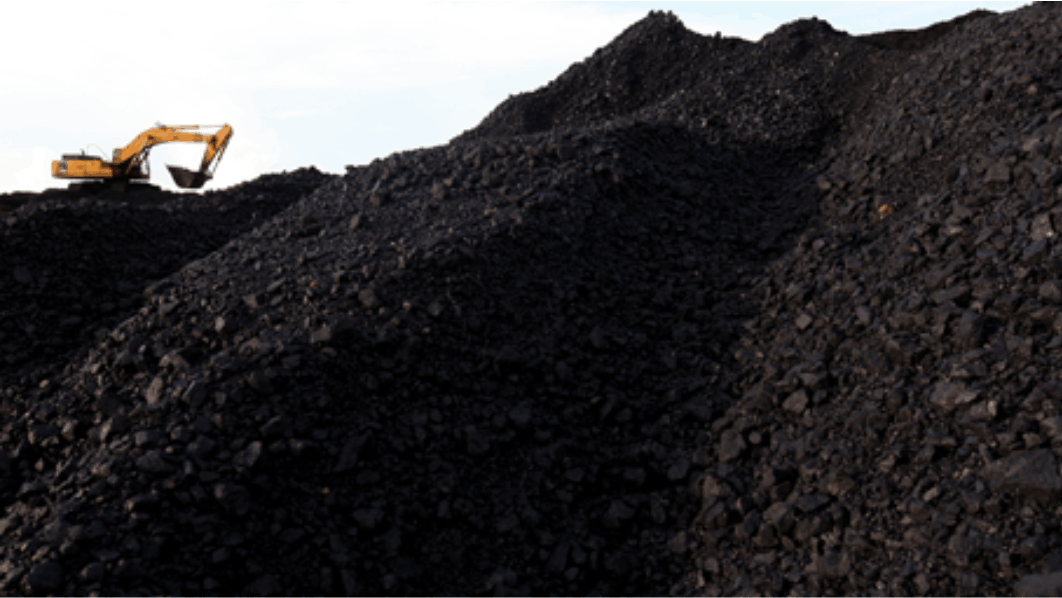
The Indonesian Coal Miners Association (APBI) has called on the government to clearly disclose the criteria and mechanisms for adjusting national coal production in 2026, amid reports that output will be significantly reduced.
The request follows circulating information that coal production could be capped at around 600 million tonnes this year, although official figures under the 2026 Work Plan and Budget (RKAB) have yet to be formally announced.
APBI Executive Director Gita Mahyarani said the association had not received final, official confirmation of the total national RKAB allocation for 2026.
“So far, there has only been an announcement of a national production adjustment plan, but without clarity on the technical mechanisms and quota distribution for each company,” Gita told CNBC Indonesia on Thursday (Feb. 19, 2026).
While acknowledging that the figure of 600 million tonnes has been widely mentioned, she said the industry’s primary concern is not merely the target number.
“For us, what is far more crucial is not just the figure, but the method and basis for determining it,” she said.
Gita warned that significant production cuts without transparent and measurable criteria could disrupt production planning, long-term export contracts, and compliance with Domestic Market Obligation (DMO) requirements.
Government stance
Energy and Mineral Resources Minister Bahlil Lahadalia has said the decision to reduce production is final, stressing that the move aims to maintain a balance between supply and demand to support global commodity prices.
“We have already made the decision. The team has concluded—like I said, it’s about supply and demand. What happens if we produce too much while prices fall?” Bahlil said on Wednesday (Feb. 18).
Read also: Coal producers face steep cuts as MEMR tightens 2026 RKAB approvals
He added that Indonesia’s natural resources should not be sold cheaply and that mining governance must be measured and sustainable for future generations.
The government plans to lower coal production to around 600 million tonnes in 2026, down roughly 190 million tonnes from the 2025 realization of 790 million tonnes. Nickel ore output is also set to be capped at 250–260 million tonnes, compared with 379 million tonnes in the 2025 RKAB.
DMO implications
Earlier, the Ministry of Energy and Mineral Resources (MEMR) said it has granted 100% production quotas to first-generation PKP2B coal contractors and state-owned mining companies holding IUP licenses, on condition that they allocate at least 30% of output upfront to meet DMO requirements for state utility PLN.
Director General of Minerals and Coal Tri Winarno said the policy was designed to safeguard domestic coal supply for the power sector as the government moves to curb overall production.
Under current regulations, miners must allocate at least 25% of output for domestic use. However, with PLN’s coal needs estimated at around 240 million tonnes, officials have indicated the DMO share could rise to 30% or more if total production is capped at 600 million tonnes.
Industry stakeholders have warned that higher DMO requirements combined with lower production ceilings could further tighten export availability and impact revenue projections.
APBI reiterated that clarity on quota distribution and calculation methods is essential to ensure fair implementation and maintain investment certainty in Indonesia’s coal sector.
Editing by Reiner Simanjuntak