

Energy ministry partners with IEA to tackle methane emissions in oil and gas
Saturday, January 24 2026 - 08:16 AM WIB
By Romel S. Gurky
The Directorate General of Oil and Gas at the Ministry of Energy and Mineral Resources (MEMR) is strengthening international cooperation with the International Energy Agency (IEA) to reduce methane emissions from Indonesia’s oil and gas sector, as part of the government’s broader climate change mitigation efforts.
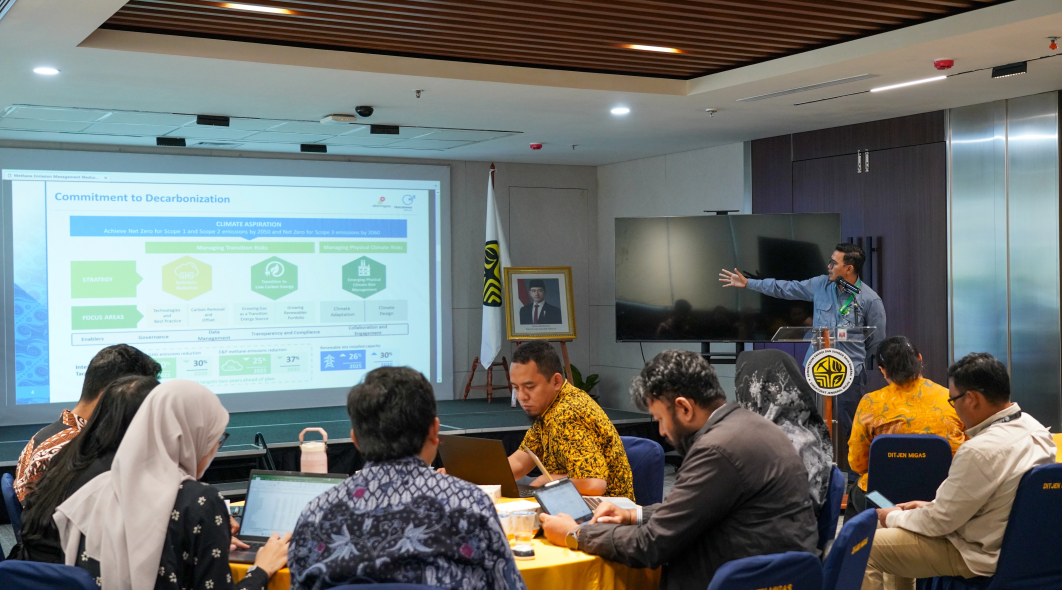
The commitment was reaffirmed at a workshop titled Managing Methane Emissions in the Fossil Fuel Sector, held at the Directorate General of Oil and Gas office in Jakarta on January 20. The event was organized jointly by the Directorate General of Oil and Gas and the IEA.
Speaking at the opening, the ministry’s Director of Oil and Gas Program Development, represented by the Coordinator for Oil and Gas Cooperation Pinta Uly Talytha Kumy, said Indonesia must strike a balance between energy security objectives and environmental protection.
“Energy supply and climate change have become challenging issues for many countries. We need to reduce greenhouse gas emissions, including methane, while continuing to increase oil and gas production and ensure access to affordable energy,” Pinta said. She added that Indonesia has been a participant in the Global Methane Pledge since 2022.
Methane is estimated to have contributed around 30% of global temperature increases since the industrial revolution. Data from the IEA’s Global Methane Tracker 2025 shows that the energy sector accounts for more than 35% of global anthropogenic methane emissions, with oil and gas emissions in 2024 remaining near record highs at about 120 million tonnes.
Read also : IEA sees global gas demand growth accelerating in 2026 on LNG supply surge
Pinta noted that Indonesia’s current regulatory framework for methane management in the oil and gas sector remains limited, with existing rules largely focused on flaring control under Energy and Mineral Resources Ministerial Regulation No. 17/2021. The government is targeting zero routine flaring by 2030 as part of its commitments under the Global Methane Pledge.
“Each year, we provide flaring optimization awards to oil and gas companies as an incentive to reduce flaring and improve gas utilization. However, beyond flaring, fugitive emissions remain a challenge, and Indonesia does not yet have a specific policy instrument to limit methane emissions from oil and gas operations,” Pinta said.
She added that the Directorate General of Oil and Gas is currently working to establish a greenhouse gas reporting and monitoring system to generate reliable emissions data that can serve as the basis for future regulatory measures.
At the same event, IEA Legal Counsel K.C. Michaels presented an overview of global methane emissions trends and regulatory approaches. He said the IEA is ready to engage in deeper discussions with Indonesia to address country-specific challenges.
“Based on our analysis, around 75% of methane emissions in Indonesia can technically be reduced, and nearly two-thirds of that could be achieved at no net cost,” Michaels said. “We are very open to working closely with the Indonesian government and industry to share experiences, develop solutions, and provide support using the resources we have.”
Editing by Reiner Simanjuntak