

Govt curbs new nickel smelter investment to push battery, green industry
Monday, May 25 2026 - 04:17 PM WIB
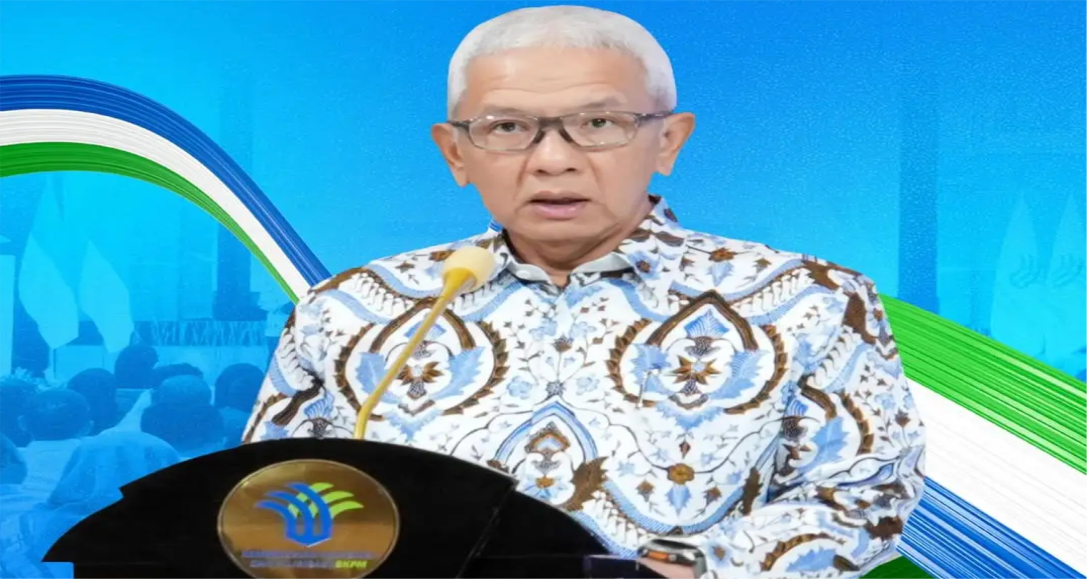
Indonesia is tightening controls on new upstream nickel smelter investments and redirecting its downstream strategy toward battery materials and green industrial products, a senior investment ministry official said on Monday, as Southeast Asia’s largest economy seeks to maximize the value of its vast nickel reserves.
The policy shift follows the issuance of Government Regulation No. 28/2025 on risk-based business licensing, which restricts new investments in smelters producing intermediate nickel products such as nickel pig iron (NPI), ferronickel (FeNi), nickel matte and mixed hydroxide precipitate (MHP).
“The government wants nickel investments to move further downstream by encouraging advanced derivative products such as battery raw materials, green industrial components and even final product manufacturing,” Rudy Salahuddin, Secretary of the Ministry of Investment and Downstreaming/Investment Coordinating Board (BKPM), said during a public discussion in Jakarta on Monday.
Read also : BKPM seeks to replicate nickel downstreaming in bauxite, solar panels
Indonesia, the world’s largest nickel producer, has aggressively pursued a downstreaming strategy in recent years by banning exports of raw nickel ore and attracting billions of dollars in smelter investment, particularly from Chinese firms.
However, the government is now seeking to steer investment beyond basic processing and toward higher value-added industries linked to electric vehicle batteries and clean energy technologies.
Under the new regulation, rotary kiln electric furnace (RKEF)-based smelters, which typically produce NPI and ferronickel, as well as high-pressure acid leach (HPAL) facilities producing only MHP, are no longer considered priority investment targets, Rudy said.
The restrictions apply to smelter operators classified as manufacturing industries holding industrial business licenses issued by the Industry Ministry, rather than mining permits.
Indonesia sees nickel as a strategic mineral in the global energy transition because of its use in electric vehicle batteries and energy storage systems.
Rudy said demand for nickel was also expected to rise alongside the government’s plan to develop 100 gigawatts of solar power capacity, which would require large-scale battery storage systems to address the intermittent nature of solar generation.
“The control of nickel smelter investment through PP No. 28/2025 is not merely a restriction, but a step to direct the utilization of nickel reserves more strategically,” he said.
The government hopes the policy will strengthen Indonesia’s industrial independence, attract higher-quality investment and position the country as a major player in the global clean energy supply chain.
Editing by Reiner Simanjuntak