

Indonesia pushes rail expansion outside Java to cut logistics costs
Thursday, April 23 2026 - 06:31 AM WIB
By Romel S. Gurky
Indonesia is accelerating plans to expand railway networks across Sumatra, Kalimantan and Sulawesi as part of efforts to reduce logistics costs and improve regional connectivity, a senior minister said.
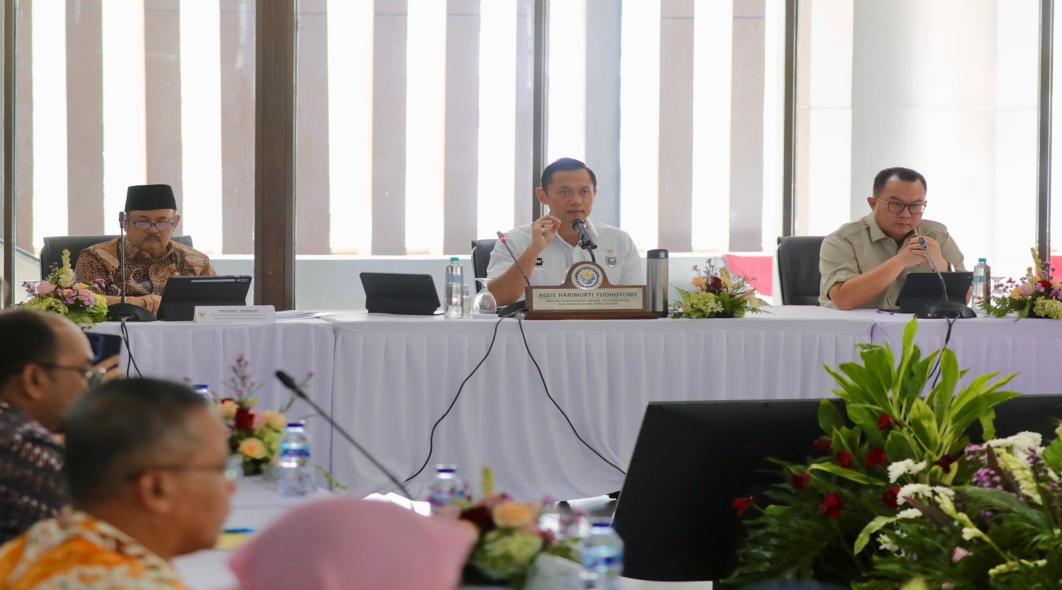
Coordinating Minister for Infrastructure and Regional Development Agus Harimurti Yudhoyono said the initiative is a priority under President Prabowo Subianto’s national development program, aimed at addressing regional disparities and boosting economic competitiveness.
The plan includes developing new rail corridors and reactivating existing lines, with total additional network length targeted at around 14,000 kilometers by 2045.
“By building an integrated railway network, we can significantly reduce logistics costs and improve inter-regional competitiveness,” Agus said during a coordination meeting in Jakarta.
Indonesia’s rail transport currently plays a limited role in national mobility, accounting for around 4% of passenger transport and just 1% of logistics, highlighting the need for expansion.
Read also : Batang SEZ to build rail-linked dry port with KAI, Pelindo
The government estimates investment requirements of between Rp1,100 trillion and Rp1,200 trillion (approximately $64.3 billion to $70.2 billion) to support the development through 2045.
Agus said financing would not rely solely on the state budget, with plans to involve private sector participation and alternative funding schemes.
Development priorities differ across regions. Sumatra will focus on expanding and strengthening existing rail networks, Kalimantan will require entirely new infrastructure, and Sulawesi will emphasize integration with industrial zones and key commodity areas.
The government also highlighted the environmental benefits of rail transport, noting its relatively low contribution to greenhouse gas emissions compared with other modes of transport.
Authorities said coordination among ministries, regional governments and state-owned enterprises will be key to implementing the program, which is expected to support long-term economic growth and more balanced regional development.
Editing by Alexander Ginting