

Indonesia relaxes export licensing for mining, oil and gas
Wednesday, April 8 2026 - 09:34 AM WIB
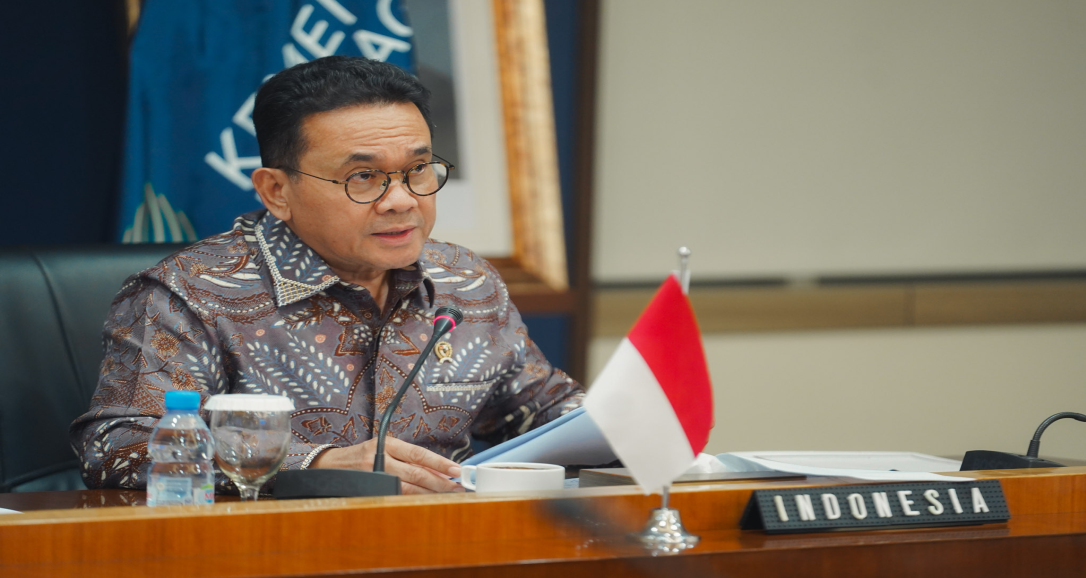
Indonesia’s Ministry of Trade has relaxed export licensing requirements for key mining, mineral, and oil and gas commodities, easing rules for coal, tin, and mineral concentrates such as ilmenite and rutile, as part of a broader push to cut red tape and improve the investment climate.
The changes are set out in Minister of Trade Regulation No. 5 of 2026 and No. 6 of 2026, which amend existing export policies and rules on prohibited goods. Both regulations were promulgated on March 26 and took effect on April 1.
Trade Minister Budi Santoso said the measures are aimed at simplifying export procedures and boosting competitiveness amid shifting global trade conditions.
“The government is simplifying export licensing to improve the ease of doing business and the investment climate,” he said in a statement Tuesday, adding that the new rules remove several requirements and sanctions while reducing restrictions on certain goods.
Director General of Foreign Trade Tommy Andana said the revisions respond to industry demands for faster and more efficient export processes, particularly in the mining and energy sectors.
For industrial tin, exporters are now only required to obtain Export Approval (PE) and a Surveyor Report (LS), with the Registered Exporter (ET) requirement removed. In the oil and gas sector, requirements have been simplified to PE and LS, although natural gas exports via pipelines will still require ET.
Coal export procedures have also been eased, including the removal of mandatory cooperation agreements for ET applications and the requirement to realize exports at least once within two years, along with related sanctions.
Read also : Ministry tightens RKAB approval process for miners
The regulations also remove certain technical specifications for solder tin — such as limits on iron content, dimensions, weight and packaging — to improve efficiency. Greater flexibility has also been introduced in sourcing raw materials to support downstream tin industries.
In parallel, the government is accelerating digitalization of export licensing through integrated systems across ministries and agencies. Export Approvals for selected commodities, including rice and fishery products, can now be issued electronically and automatically.
The licensing system has also been integrated with the Indonesia National Single Window (SINSW), enabling real-time data exchange to speed up verification and reduce administrative bottlenecks.
The new rules include adjustments to regulatory authority and nomenclature to improve legal certainty. Authority to issue transport documents for aquatic wild plants and animals has been transferred from the Ministry of Forestry to the Ministry of Marine Affairs and Fisheries, in line with Law No. 32 of 2024.
For mineral exports, Export Approvals for ilmenite and rutile concentrates are now limited to holders of Mining Business Licenses (IUP) and Special Mining Business Licenses (IUPK), with the Industrial Business License (IUI) requirement removed.
Other changes include a revision to sanitary certification codes for edible bird’s nest and a new three-year validity period for Registered Exporter status for kratom, replacing lifetime validity.
Tommy said the regulations were formulated through cross-ministerial coordination and input from business associations, and are expected to support Indonesia’s trade balance while maintaining economic stability amid global uncertainty.
Editing by Reiner Simanjuntak