

Indonesia's coal quota review could lift output, though below last year's peak
Wednesday, June 10 2026 - 07:27 AM WIB
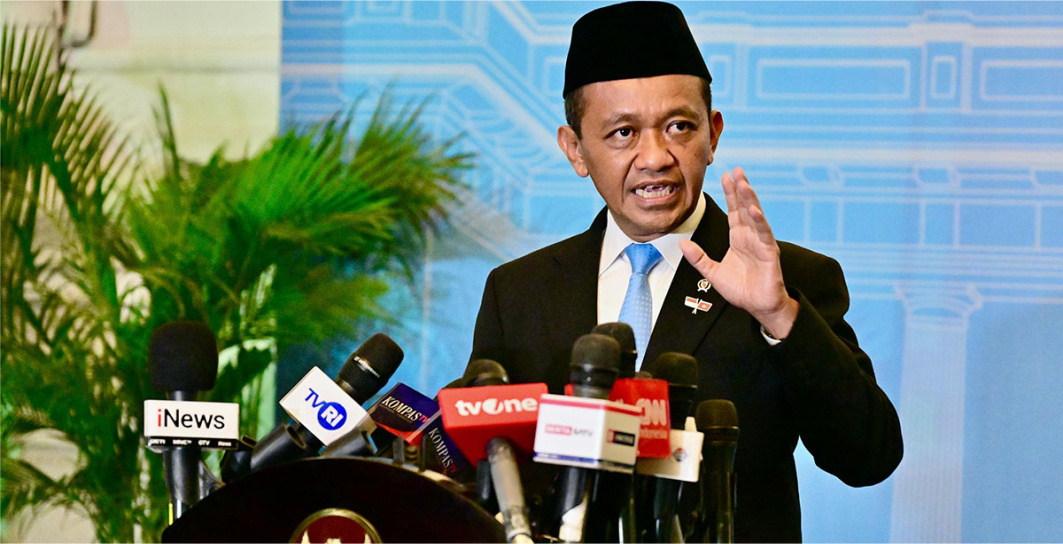
The government is considering raising its 2026 coal production quota in response to stronger prices and geopolitical uncertainties, but industry players expect actual output to remain below last year's record level because mining capacity has already been reduced following earlier production cuts.
Minister of Energy and Mineral Resources Bahlil Lahadalia said this week the government would undertake a "measured relaxation" of coal production quotas approved under miners' annual work plans and budgets (RKAB), allowing output to increase if market conditions remain favorable.
The move marks a shift from the government's earlier decision to cap approved 2026 coal production at around 600 million metric tons, significantly below Indonesia's 2025 output of 817.5 million tons.
"We will always follow market developments. If prices are good, we will increase production. If prices start to weaken, we will implement policies to maintain supply and demand balance," Bahlil told reporters on Monday.
The minister said tensions in the Middle East and their impact on global commodity prices were among the factors behind the government's decision to review production limits.
Industry experts have welcomed the plan, arguing that the current quota is too restrictive given domestic demand and international market conditions.
Singgih Widagdo, chairman of the Indonesian Mining and Energy Forum (IMEF), said the revised quota should be raised to around 700 million tons, which he described as a more realistic level considering last year's production and coal output trends in major consuming countries such as China and India.
"With 2025 production reaching 790 million tons and taking into account production records of individual companies as well as higher output from China and India, a relaxation to around 700 million tons would be more rational in responding to market developments," he said.
A higher quota would also boost government revenue through royalties, taxes and non-tax state income, while helping mining companies maintain profitability as long as coal prices remain above production costs, he added.
The Energy Ministry's director general for minerals and coal, Tri Winarno, said revisions to miners' 2026 work plans would begin in July, with applications accepted until July 31.
The government will assess requests based partly on their potential contribution to state revenue, he said.
Despite the expected relaxation, miners do not believe production can quickly return to last year's level.
FH Kristiono, president director of coal producer Ucoal Sumberdaya, estimated Indonesia's coal output would reach only about 752 million tons this year, even if the government restores quotas closer to previous levels.
He said production capacity had already been reduced after the quota cuts were imposed at the beginning of the year, lowering average monthly output capacity to around 57.3 million tons from 68.1 million tons in 2025.
"The quota should ideally be restored to last year's production capacity of 817 million tons, but nearly six months of reduced quotas have already lowered capacity," Kristiono told Bloomberg Technoz. "It will take time to bring that capacity back."
Industry groups have warned that the earlier production cuts threatened jobs and mining support industries, including contractors, equipment suppliers, transport operators and shipping companies.
The Indonesian Mining Professionals Association (Perhapi) estimated in February that as many as 50,000 workers in mining services could be affected by lower production levels, while around 10,000 heavy equipment units risked becoming idle.
The mining sector has also weighed on Indonesia's economic performance. Official data showed the mining and quarrying sector contracted 2.14% year-on-year in the first quarter of 2026, even as the broader economy expanded 5.61%.
Indonesia, the world's largest thermal coal exporter, produced 229 million tons of coal in the first four months of 2026, equivalent to 38.2% of the current annual quota. Of that volume, 145 million tons were exported, while 84 million tons were supplied to the domestic market under the country's domestic market obligation (DMO) scheme.
Analysts say any increase in production approvals is likely to support spot market sales, while long-term export contracts will continue to depend on regulatory certainty and stable multi-year production planning.
Editing by Reiner Simanjuntak