

Indonesia shifts NGL–LPG sales scheme to upstream model, expects lifting increase
Tuesday, March 10 2026 - 09:42 AM WIB
By Bernard Loebs
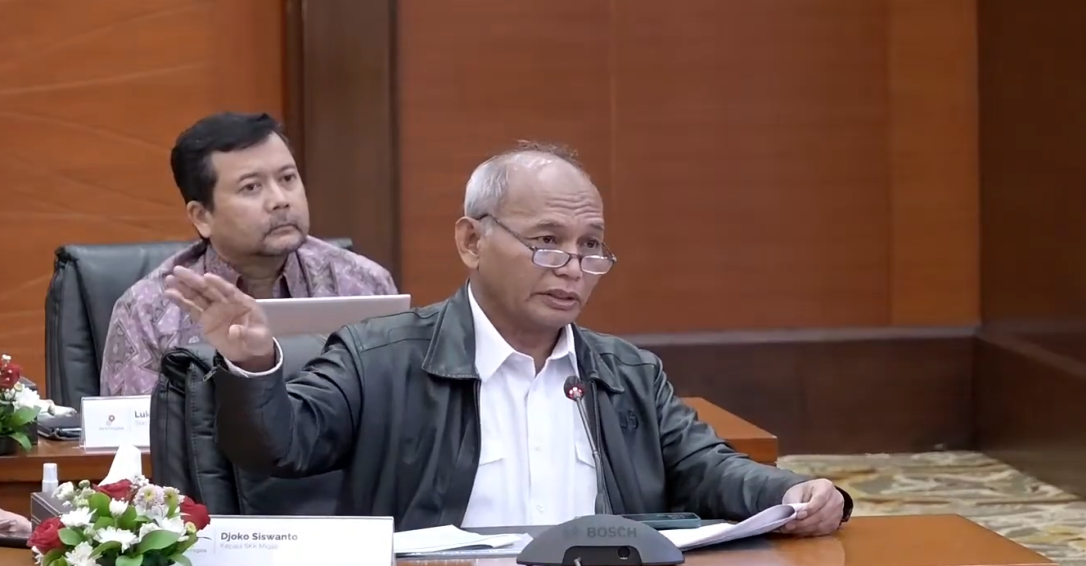
Indonesian upstream authority SKK Migas has changed the sales scheme for natural gas liquids (NGL) and liquefied petroleum gas (LPG) from a downstream to an upstream mechanism, a move expected to boost Indonesia’s recorded oil lifting and encourage more domestic LPG production.
SKK Migas Head Djoko Siswanto said the revised agreement was signed on Monday by several production sharing contract contractors (KKKS) acting as sellers and domestic companies as buyers.
Among the sellers were PT Pertamina Hulu Rokan, PT Pertamina EP Cepu, PT Pertamina EP and Petronas. Buyers included PT ESSA Industries Indonesia Tbk (IDX: ESSA) and PT ARSynergy Resources.
Djoko said the policy reflects the classification of NGL and LPG, derived mainly from propane (C3) and butane (C4) contained in natural gas streams, as petroleum products under existing oil and gas regulations.
With the new scheme effective from March, Indonesia’s recorded oil lifting is expected to increase by about 10,165 barrels per day, he said.
Read also: Pertamina unit signs Hartree and Phillips 66 deals for 2026 crude and LPG supply
Djoko said the policy is also intended to stimulate investment in domestic LPG processing facilities, particularly for gas streams containing C3 and C4 components.
Several LPG projects are scheduled to come online in the near term. These include an LPG plant in Cilamaya, West Java, developed by PT Energi Nusantara Parahyangan using feedstock from the Offshore North West Java field operated by Pertamina Hulu Energi.
Another LPG facility in East Java is being built by PT Sulawesi Ammonia Gas using C3 and C4 feedstock sourced from fields operated by PT Pertamina EP. Together, the two projects are expected to add about 3,000 barrels per day of LPG and condensate output and are planned for inauguration after the Eid holiday.
Further projects are planned in Sulawesi and Jambi and are expected to begin operations in 2027. The Sulawesi LPG plant will use feedstock from the Tomori Block operated by a joint venture between Pertamina and Medco Energi Internasional Tbk (IDX: MEDC), while the Jambi facility will process C3 and C4 components from the Jambi Merang Block.
The Jambi project will involve relocating an existing LPG plant from East Java as production from the West Madura Offshore Block declines in the next two to three years.
Djoko said the government hopes the scheme change and new LPG plants will help increase domestic supply and reduce dependence on imports, especially amid rising global LPG prices linked to geopolitical tensions in the Middle East.
Editing by Alexander Ginting