

Indonesian nickel smelters run at half capacity due to ore shortages
Thursday, June 18 2026 - 04:05 PM WIB
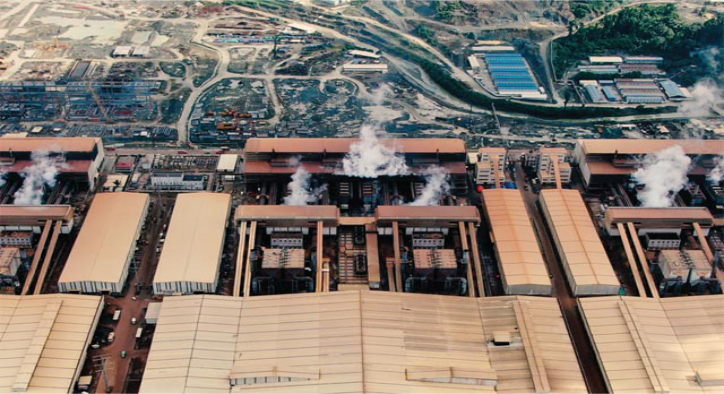
Several Indonesian nickel smelters are operating at less than half of their capacity due to shortages of nickel ore, highlighting concerns over raw material supply after the government moved to tighten production approvals, an industry association said on Thursday.
Smelters using rotary kiln electric furnace (RKEF) technology in Sulawesi and North Maluku have reduced operations and placed some production lines in "hot idle" mode to conserve furnaces while awaiting additional ore supplies, said Arif Perdana, chairman of the Indonesian Nickel Industry Forum (FINI).
"Several RKEF production lines in Central Sulawesi, Southeast Sulawesi and North Maluku are operating at less than 50% capacity," Arif told Bisnis.com.
The disruption follows the government's initial plan to limit nickel ore production this year through the approval of mining work plans and budgets (RKAB), with output previously projected at 250 million-260 million metric tons, down from 320.37 million tons produced last year.
Although the government later signalled it would relax production restrictions to meet smelter demand, the earlier policy has already affected ore availability, Arif said.
He said smelter operators were keeping furnaces running at minimal levels to avoid full shutdowns, which could take six to eight weeks to restart and risk damaging furnace linings.
The reduced operations have forced companies to absorb additional costs while waiting for ore supplies to recover, he added.
High-pressure acid leach (HPAL) nickel processing plants have so far been less affected because many hold long-term ore supply agreements with mining companies. However, Arif warned that HPAL facilities could also face shortages later this year if additional mining quotas are not approved.
"HPAL utilization remains relatively high, but these plants consume substantially more ore per ton of nickel produced than RKEF facilities," he said. "Without additional supply, HPAL plants could begin facing shortages in the third or fourth quarter."
Indonesia, the world's largest producer of nickel, has sought to manage ore production amid concerns over global oversupply and weak nickel prices, while also ensuring sufficient feedstock for its rapidly expanding downstream processing sector.
Arif said FINI supports efforts to balance production with market conditions but cautioned that excessive cuts could undermine Indonesia's downstream nickel industry, which requires large volumes of ore to supply existing smelters and new projects, particularly HPAL plants producing battery materials.
He also warned that prolonged ore shortages could lead to layoffs, reduced economic activity in mining regions and lower government revenue.
FINI has urged the government to accelerate approvals for RKAB revisions and allocate unused production quotas from previous years to integrated downstream projects, including nickel sulfate, precursor, cathode and battery manufacturing facilities.
The association has also called for a review of the mineral benchmark price formula introduced in April, which raised the benchmark price for 1.2% nickel limonite ore to $40.18 per wet metric ton from $16 previously.
According to Arif, the higher benchmark price has discouraged transactions in some parts of the market because producers are prohibited from selling below the official price while buyers are unwilling to pay the higher level.
Energy Minister Bahlil Lahadalia said earlier this month that nickel production would be adjusted to match smelter demand, following concerns from industry participants over the proposed production cuts.
"The government's obligation is to ensure raw materials are available for industry," Bahlil said on June 8. "Production capacity, industrial demand and the RKAB quotas we issue must remain balanced so that industry can continue operating."
Editing by Reiner Simanjuntak