
MEMR says nickel RKAB revisions possible in H2, volume to depend on demand
Wednesday, March 4 2026 - 02:22 PM WIB
By Pandu Setiabudi
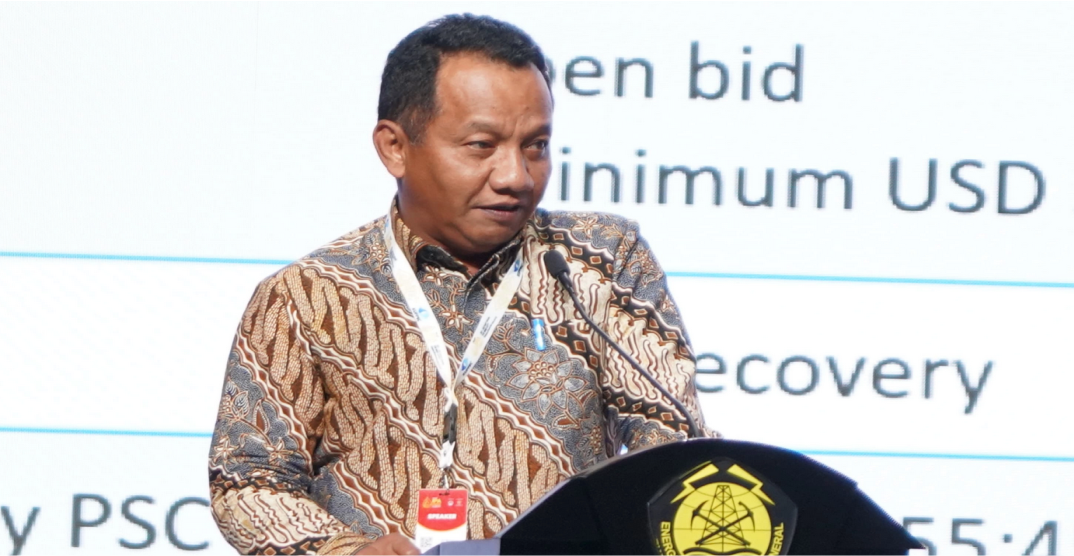
Director General of Mineral and Coal at the Energy and Mineral Resources Ministry (MEMR), Tri Winarno, said revisions to nickel Work Plans and Budgets (RKAB) could be made in the second half of the year in line with prevailing regulations, depending on market demand.
Speaking on Tuesday (March 3), Tri said the option to revise the RKAB is not a new policy.
“Regarding revisions, the possibility is there because the regulation allows revisions in the second half of the year. This is not a special policy; it has existed for some time,” he said.
However, Tri noted that it is too early to determine the scale of any potential adjustment. The volume of revisions will depend largely on actual demand from domestic nickel smelters.
“We will have to see how much the need is. The percentage of the revision will depend on that,” he said.
Tri said domestic smelter demand this year is estimated at around 310 million tonnes of nickel ore, while the government’s initial 2026 RKAB allocation stands at 260–270 million tonnes. He explained that the approved volume was intentionally set below projected smelter demand as part of efforts to help stabilise global nickel prices.
“We have to control prices. Last year prices stayed around US$14,000–15,000. When the RKAB cut was announced, prices immediately jumped to US$18,000,” he said.
Read also: MEMR may allow nickel quota revisions in July, industry group says
He added that tighter RKAB approvals are aimed not only at price management but also at preserving long-term resource sustainability. Indonesia’s nickel reserves are estimated at around 5 billion tonnes, which could be depleted in less than 20 years if production continues at an aggressive pace.
“If production continues massively, in less than 20 years it will be exhausted. That’s it. While we are searching for new reserves, we are also applying the brakes,” he said.
To bridge the gap between domestic supply and smelter demand, Tri acknowledged that imports — particularly from the Philippines — would still be needed, as in previous years, although volumes are expected to rise.
Data from Statistics Indonesia (BPS) show that Indonesia imported 15.84 million tonnes of nickel ore in 2025, with 15.33 million tonnes sourced from the Philippines. In January 2026, imports totalled 212,760 tonnes, comprising 156,200 tonnes shipped from the Philippines to Weda and 56,560 tonnes from China to Kendari.
The January figure marked a 270% increase compared with January 2025, when imports reached 57,450 tonnes, all from the Philippines. However, it was significantly lower than December 2025 imports of 1.52 million tonnes, of which 1.46 million tonnes came from the Philippines.
The Indonesian Nickel Miners Association (APNI) earlier said MEMR may allow miners to revise their 2026 production plans in July, potentially increasing output quotas by up to 30%.
“After our detailed discussion, miners may be allowed to submit RKAB revisions in July,” APNI Secretary General Meidy Katrin Lengkey said on Monday.
She said the maximum increase under the revision is expected to range between 25% and 30% to help ensure supply for domestic smelters.
Editing by Reiner Simanjuntak