

Miners can continue export of mineral concentrates under certain conditions
Friday, January 13 2017 - 01:29 AM WIB

Courtesy of ESDM
The government finally issued on Thursday Government Regulation No 1/2017, which is a fourth revision of Government Regulation No 23/2010 on coal and mineral businesses management, allowing mining firms to continue export of mineral concentrates for another five years but must meet tougher requirements.
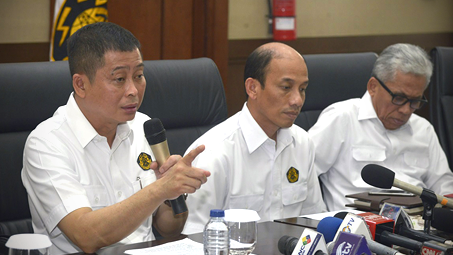
Minister of Energy and Mineral Resources Ignasius Jonan told a press conference that miners wishing to continue export of mineral concentrates must first convert their permit from mining contract of work (CoW) to special mining business license (also known as IUPK).
?They are allowed not to convert (from CoW to IUPK), but they can only export minerals which have been refined. If they want to export mineral (concentrates) they must convert from CoW to IUPK,? said Jonan, who also issued Ministerial Regulation No 5/2017 as implementing ruling of the new government regulation.
They must also sign commitment to complete the required domestic smelter within five years, and that the ministry will assign an independent party to audit the progress of their smelter projects every six months. Their export permit can be revoked if they fail to make significant progress in developing the smelter projects.
Jonan added that the ministry will propose to the Ministry of Finance an export tax of up to 10 percent.
Mining firms owned or controlled by foreign investors will also be required to gradually divest up to 51 percent stake to Indonesian investors after five years of production. The 51 percent divestment requirement also applies to mining companies with integrated operation such as IDX-listed integrated nickel mining firm PT Vale Indonesia and mining firms operating underground mine such as gold and copper giant PT Freeport Indonesia.
The previous government regulation allowed mining firms with integrated operation to only divest up to 40 percent stake to Indonesian investors, while mining firms operating underground mine can divest only up to 30 percent stake.
Meanwhile, the new regulation allows mineral mining companies to seek for extension of their mining permit five years prior to expiry, compared to the previous regulation which stipulated that the miners can only start applying for contract extension two years prior to expiry.
The 2009 Mining Law stipulates that raw and half-processed mineral commodities such as concentrates can no longer be exported starting early 2014, pushing miners to build domestic smelters in a bid to allow the country to generate greater value from its mineral resources. But as many miners had not completed the required domestic smelters, the previous government introduced Government Regulation No 1/2014 allowing miners such as copper giants PT Freeport Indonesia and PT Newmont Nusa Tenggara (now called PT Amman Mineral Nusa Tenggara) to continue export of mineral concentrates including copper concentrates until January 11, 2017 by which time the required domestic smelters were supposed to have been completed.
However, as companies such as PT Freeport, a subsidiary of US-based Freeport McMoRan Copper & Gold Inc, and Amman Mineral have yet to complete the required domestic smelters, the current government, as has been previously anticipated, once again allows the miners to continue export mineral concentrates, a policy seen by some as tantamount to breaching the mining law, which stipulates a ban on the export of raw and half-processed minerals including concentrates.
Jonan, however, argued that by requiring miners to first convert their mining permit from CoW to IUPK for them to be eligible continue export, the government does not violate the mining law as the export ban stipulated by the law only applies to CoW miners, not those holding IUPK.
A Source told this portal previously that PT Freeport had objected to the requirement to convert the CoW into IUPK amid fears that mining permit provides less legal and investment certainty for the company.
The proposed export tax has also been objected by the miners as it would only hamper them from financing their smelter projects.
Editing by Reiner Simanjuntak