

Ministry proposes incentives for renewables
Thursday, April 27 2017 - 01:24 AM WIB
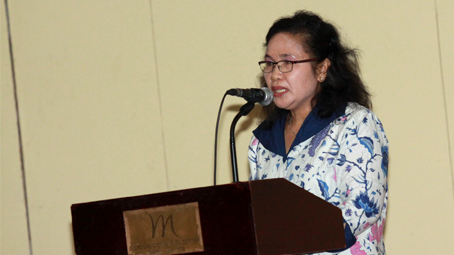

Petromindo|Khalsa
The Ministry of Energy and Mineral Resources has proposed for the government to provide incentives for renewable power plant projects in the country as compensation for a recently introduced tariff framework.
Director of Miscellaneous Renewable Energy at the ministry?s Directorate General of New and Renewable Energy, Maritje Hutapea told Petromindo.com on Wednesday that the ministry has discussed the proposal with Vice President Jusuf Kalla. ?We?re waiting for a decision, hopefully soon,? she said.
Maritje said that the proposed incentives include reduction in corporate income tax, import tax, and possibly interest rate subsidy.
Minister of Energy and Mineral Resources has recently issued Ministerial Regulation No 12/2017, which sets a new tariff framework for electricity produced from renewable power plants. According to the new regulation, the price of electricity from renewable power plants sold to state-owned electricity firm PT PLN is limited at 85 percent of the local electricity supply cost (or BPP) of PLN where the project is located. This applies if the local BPP is higher than the PLN national average BPP. If the local BPP is lower than the national BPP, the selling price is set at 100 percent of the local BPP. The new tariff framework is applied for all type of renewables except geothermal and city waste, whose electricity tariff is set at equal to the local BPP if it is higher than the national average, and if it is lower, PLN will negotiate with the developers to determine the tariff. The new tariff framework is expected to help bring down the BPP of PLN, which in turn would eventually help reduce selling price of electricity to end consumers.
The new ministerial regulation and the tariff framework have been protested by the renewable industry players saying that it would make most renewable projects to be not commercially feasible, except probably in areas in eastern part of the country such as Papua, Maluku and Nusa Tenggara were the local BPPs are still quite high as power plants there are mostly fired by costly diesel fuel.
The new tariff framework will see lower selling price of electricity from renewable power plants to PLN. It is estimated that the selling price will likely range from 4.8 US cents per kWh to 14.39 cents per kWh, much lower than the tariff under the previous feed-in tariff mechanism which ranged between 14 and 25 cents per kWh.
Represented by three lobby groups including the Indonesian Chamber of Commerce and Industry (Kadin), the Indonesia Renewables Community (METI), and the Indonesian Private Power Producers Association (APLSI), the industry have met with Kalla and sent letters to President Joko Widodo, demanding the ministry to reevaluate the policy, and asked for incentives to help accelerate the development of renewables in the country, where the government has set a target for renewables to account for 22.6 percent of the energy mix by 2025 from 12 percent currently. As per end of December last year, the total capacity of power plants operating in the country stood at 51,860 MW, of which only 6,003 MW are renewables. Some industry players have said that they would re-calculate the feasibility of their existing planned renewable projects following the introduction of the new tariff policy.
Editing by Reiner Simanjuntak