

Pertamina Power: Like it or not, Indonesia must move into green energy
Thursday, May 16 2019 - 07:50 AM WIB
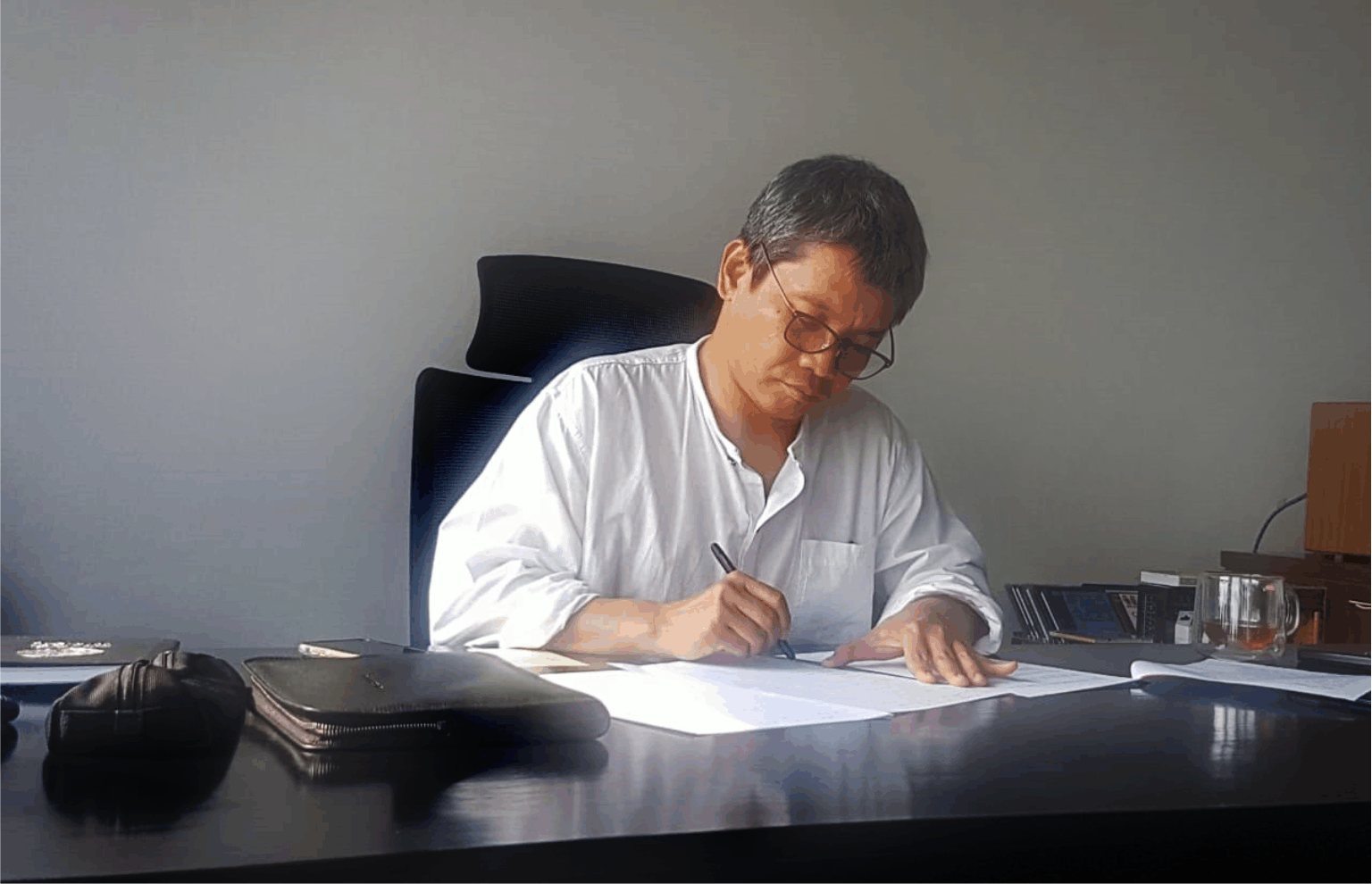
By Godang Sitompul
Long heavily dependent on fossil fuels, Indonesia will have to start making meaningful efforts to switch to green energy sources to fuel its economy in line with international trend, says President Director of power producer PT Pertamina Power Indonesia (PPI) Ginanjar.
He said that aside from international pressure for countries to intensify the use of renewable sources of energy to help fight climate change, the country’s fossil-based energy resources will one day deplete.
“Like it or not, this nation will have to move into green energy phase,” Ginanjar said in a recent interview. “Because there’s international pressure, and most importantly because of the awareness that our fossil-based energy resources will one day deplete. So we have to (start) make preparations, making plans, otherwise we’ll only be onlookers.”
He feared that if Indonesia fails to expand its renewables energy sector, the country’s exports including commodities will face difficulties in entering the global market as the international community will one day expand conditions to enter their markets including in terms of green energy credential. “We’re leaving in a large community, we must follow it (the green energy trend).”
The government of Indonesia has set a target for renewables to account for 23 percent of the country’s energy mix by 2025, a commitment it made at the 2015 Paris climate agreement. But progress has been generally disappointing as addiction towards fossil-based energy remains high particularly cheaper coals despite the country’s renewables potentials such as geothermal, hydro, solar, wind, and biogas.
Set up in 2016, PPI, a subsidiary of state-owned oil and gas firm PT Pertamina, is engaged in the development of “cleaner” power plants such as gas-based and renewable-based, except geothermal, which is developed by its affiliate PT Pertamina Geothermal Energy (set up in 2006).
Despite its relatively young age, PPI already has a variety of power plant projects under its portfolio.
Its largest project so far is the 1,760 MW PLTGU Jawa-1 combined-cycle power plant project in West Java Province, developed in partnership with Marubeni Corp and Sojitz Corp. Groundbreaking of the estimated US$1.8 billion project, dubbed as the first and largest integrated gas infrastructure and gas power plant in Southeast Asia, supported with floating storage and regasification unit (FSRU) with capacity of 170,000 m3, was made late last year and the project is targeted to start operation late in 2021.
Ginanjar said PPI is seeking to expand its renewable-based power plant business to help sustain Pertamina’s future business as renewables are considered as “the future source of energy” and to help realize the government’s renewables ambition.
The company currently operates two solar power plants with combined capacity of 4 MW at the Bontang LNG plant in East Kalimantan. In April, PPI signed an agreement with state-owned oil palm plantation firm PTPN III to develop and operate a 5 MW solar power plant at the Sei Mengkei industrial zone, operated by PTPN III in North Sumatra Province. The electricity output will be supplied to tenants in the industrial zone and increase renewables supply in the area.
PPI is also currently developing a 2.4 MW biogas power plant for PTPN III, and 2 MW biogas power plant for PTPN II (also in North Sumatra), both of which are targeted to start operation later this year, and reportedly also planning to develop a 6 MW biogas power plant for PTPN XIII (in West Kalimantan), targeted for completion in 2020.
The company also plans to develop a 4 MW solar power plant at Pertamina’s Dumai oil refinery in Riau Province (expected to start operation this year), and 2.4 MW solar power plant at Cilacap refinery in Central Java Province (to start operation in 2020). There are a host of other renewable projects including solar and wind in the pipeline.
This portal reported in March, quoting PPI Director of Strategic Planning and Business Development, Indra Trigha, that the company has proposed for the development of a wellhead gas-fired power plant at the Jambi Merang field in Jambi province in partnership with Engie Indonesia. The Jambi Merang field in Jambi Merang block is operated by PT Pertamina Hulu Energi Jambi Merang, an indirect upstream subsidiary of Pertamina.
PPI is also eying overseas. The company has expressed interest to develop a 1,200 MW gas infrastructure and gas power plant in Bangladesh, similar to the PLTGU Jawa-1 project. Ginanjar was quoted recently as saying that the company was awaiting for approval from the prime minister of Bangladesh of the proposed project, which will be developed in partnership with Marubeni and GE.
Ginanjar said that PPI was set up based on “two big reasons.” First is to expand the value chain of Pertamina’s core business, specifically in the gas sector.
He explained that gas production is an integrated business, which means that when an upstream company seeks to drill for gas it must already have secured the buyers (off-takers). In the case of Pertamina, the buyers include electricity and industrial companies in Japan, South Korea, and Taiwan, which import the gas in the form of LNG.
He said that Pertamina’s LNG off-takers are quite reliable, with large purchase volume under well-organized long-term international contracts, which ensures that the Pertamina gas production will be absorbed by the buyers.
“But now Pertamina does not want to rely heavily on these downstream partners (the foreign buyers). There’s good reason for us to also enter (the power plant sector),” Ginanjar said.
Thus PPI was set up to develop gas-fired power plants, of which the electricity output will be sold to state-owned electricity firm PT PLN under long-term contracts of 20-25 years. Such long-term contract will allow gas production to be more economical. “The upstream (gas projects) are run based on a 30-year concept. If it’s run on a 10-year concept, it (the gas) will be expensive. To make it more affordable (the gas upstream project) must be developed under a 30-year concept. Electricity companies can absorb the 30-year concept, that’s why we extend our value chain (to power business).”
“There are also gas companies in Indonesia, but they’re not considered as anchor buyers… The contracts are only one-year or three-year,” he added.
The second reason is the fact that the infrastructure business such as power plant is considered “cash printing” business with internal rate of return (IRR) of around 11 percent. While the IRR is lower than that in the upstream business of around 20-30 percent, the infrastructure business provides steady income. “It (the power plant business) is not a luxury business as the IIR is not quite high, but it’s steady, with revenue guaranteed for 25 years. So infrastructure is a cash flow business.”
He pointed out as an example that about 60 percent of the capacity of PLTGU Jawa-1 power plant will be guaranteed by PLN. “So the revenue will be steady for 25 years. What’s not steady is the profitability, which will depend on efficiency of our operations.”
He said that PPI has three business pillars. First is the gas to power, second is new and renewable energy, and the third is captive market, where the company will produce electricity for markets outside PLN such as in the development of renewable power plants at PTPN III’s Sei Mengkei Industrial Zone in North Sumatra.
Ginajar said that PPI is currently in the process of seeking new captive markets, but declined to provide details.
He said that in developing large projects, PPI partners with other companies to mitigate what is called “horizontal risk,” and seeks project financing with so-called senior lenders to mitigate the “vertical risk.”
Editing by Reiner Simanjuntak