

Regional LNG: Singapore unveils second LNG terminal plans
Tuesday, October 22 2024 - 09:24 AM WIB
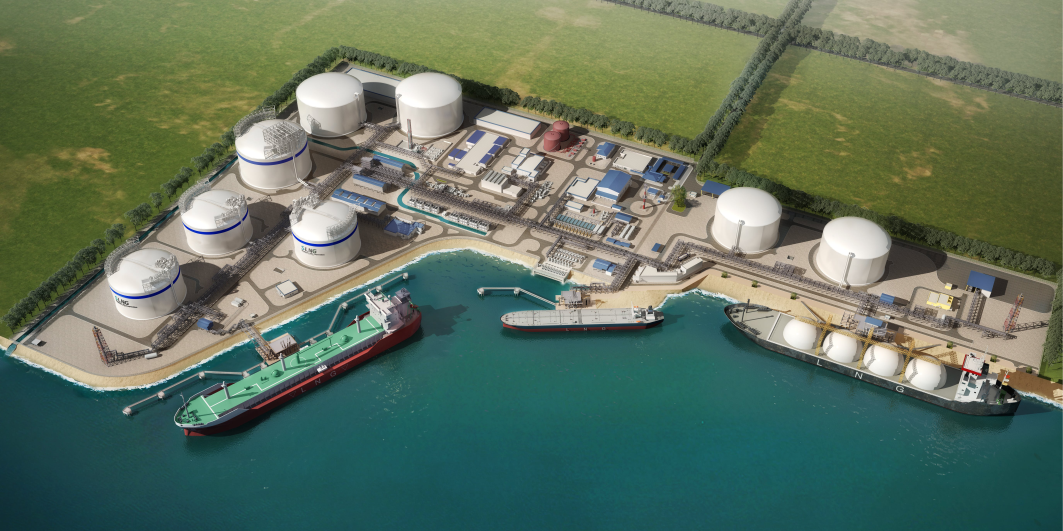
Singapore's second LNG terminal will be an offshore floating storage and regasification unit (FSRU) with a capacity of 5 million metric tons per year, located at Jurong Port, Minister for Trade and Industry Gan Kim Yong announced during the Singapore International Energy Week 2024.
The FSRU-based LNG terminal offers flexibility in operation and requires less land area compared to conventional onshore LNG import facilities, which are typically more expensive and take longer to construct.
Singapore LNG (SLNG) Corp. announced plans for the second LNG terminal a year ago to meet rising natural gas demand, although specific details were not finalized at that time. “The new terminal will have a throughput capacity of 5 million metric tons per year, representing a 50% increase over our existing LNG capacity,” the minister stated on October 21, as reported by spglobal.com.
Additionally, a senior SLNG executive confirmed that the contract for the FSRU ship has been awarded to Japan's Mitsui OSK Lines (MOL), though details regarding the size or duration of the agreement were not disclosed.
Read also: Regional LNG: Singapore, S. Korea in LNG joint procurement pact
Industry executives indicated that the new FSRU will likely require a long-term LNG contract, as the government aims to secure baseload supply for most of the volume while leaving a smaller portion for the spot market. The duration of such long-term contracts may vary based on broader industry developments. The FSRU will also enhance Singapore's flexibility in its long-term energy transition and fuel source selection.
Minister Gan also announced plans to establish a central gas entity, known as Gasco, to streamline the procurement and supply of gas to the power sector. “We will set up Gasco as a fully government-owned company by the end of this financial year,” he noted. “This approach will enable us to negotiate more favorable gas contracts, secure longer-term agreements for stable prices and supply, and diversify our gas sources to mitigate concentration risk.”
In terms of hydrogen and ammonia initiatives, Gan revealed that the government has shortlisted two consortiums for its ammonia pilot program, which will begin preliminary Front-End Engineering Design (FEED) studies by the end of 2024. “This pilot will provide valuable experience in managing low-carbon ammonia supply chains,” he added.
Singapore released its National Hydrogen Strategy a year ago, promoting the use of hydrogen, and in 2023 invited consortiums to participate in a Request for Proposal for a pilot project on Jurong Island to explore low-carbon ammonia for power generation and maritime bunkering.
The government has also launched the Low Carbon Energy Research (LCER) Funding Initiative, allocating over S$180 million since 2020 to support research into low-carbon energy technologies, including hydrogen. Earlier in 2024, Singapore inaugurated the Centre for Hydrogen Innovations at the National University of Singapore, the first in Southeast Asia, to advance hydrogen research across the entire value chain.
Editing by Reiner Simanjuntak