

Small margins make CNG retail business unattractive
Wednesday, March 15 2017 - 03:31 AM WIB

Petromindo|Khalsa
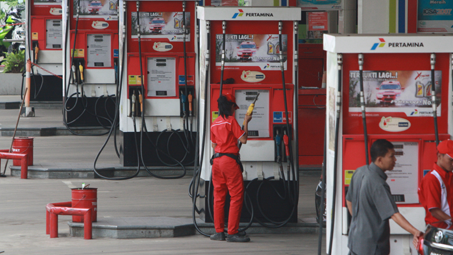
Fuel oil refill stations (better known here as SPBU) owned by private companies have not been attracted to enter the compressed natural gas (CNG) retail business due to small margins, Bisnis Indonesia reported on Wednesday.
The paper quoted Compressed Natural Gas and City Gas Manager at state-owned oil and gas firm PT Pertamina, Ryrien Marisa as saying that aside from the relatively huge investment needed to set up a gas refill station (or SPBG), there is also extra transportation cost excluded from the CNG retail price set by the government.
She said that the limited number of SPBGs in the country have been largely built by Pertamina and state-controlled gas distribution firm PT PGN Tbk, which bore the cost of transporting the gas from mother station to the SPBGs in areas where gas pipeline does not exist. This cost is not included in the retail price of the CNG, which is set by the government.
Ryrien said the current retail price of CNG at Rp 3,100 per liter of Premium gasoline equivalent is deemed too low and has not changed for the past seven years. She said that Pertamina since 2013 has asked the government to increase the retail price of CNG to Rp 4,500 per liter of Premium gasoline equivalent, but so far there has been no response, adding that the real retail price of the CNG is actually around Rp 5,000 per liter of Premium Gasoline equivalent.
The concern, however, is that if the CNG price is increased, motorists are unlikely to switch from fuel oil such as Premium gasoline, whose retail price currently stands at Rp 6,450 per liter.
Minister of Energy and Mineral Resources Ignasius Jonan said on Monday he would soon issue a new ministerial regulation requiring some 5,000 SPBUs in the country to install gas dispensers as part of efforts to encourage motorists to switch to CNG in a bid to speed up the government?s fuel oil to gas conversion program.
Director General of Oil and Gas at the ministry IGN Wiratmaja Puja said that the SPBUs to be affected by the new regulation are those located near gas working areas where the gas can be either transported via pipeline or mobile refueling unit. The new regulation will also arrange profit margins for the SPBU owners.
Experts have said that the lack of gas refill stations has been seen as one of the factors discouraging motorists from switching to compressed natural gas. According to Ministry of Energy and Mineral Resources, there are only 68 gas refill stations in the country, much lower than 470 in Thailand and 2,350 in Iran.
Despite huge gas allocation for the land transportation sector, consumption of compressed natural gas by motorists, public buses, and other vehicles remain low and has in fact declined in the first two months of this year, undermining the government?s fuel oil to gas conversion program.
Ryrien that realized gas consumption in the land transportation sector last year slightly increased to 3.8 mmscfd from 3.6 mmscfd in the previous year, but as per February of this year consumption rate weakened to 2.8 mmscfd, much lower compared to the allocation of 25 mmscfd. (*)