

Around 300 coal miners yet to submit 2026 work plans: MEMR
Monday, January 26 2026 - 08:41 AM WIB
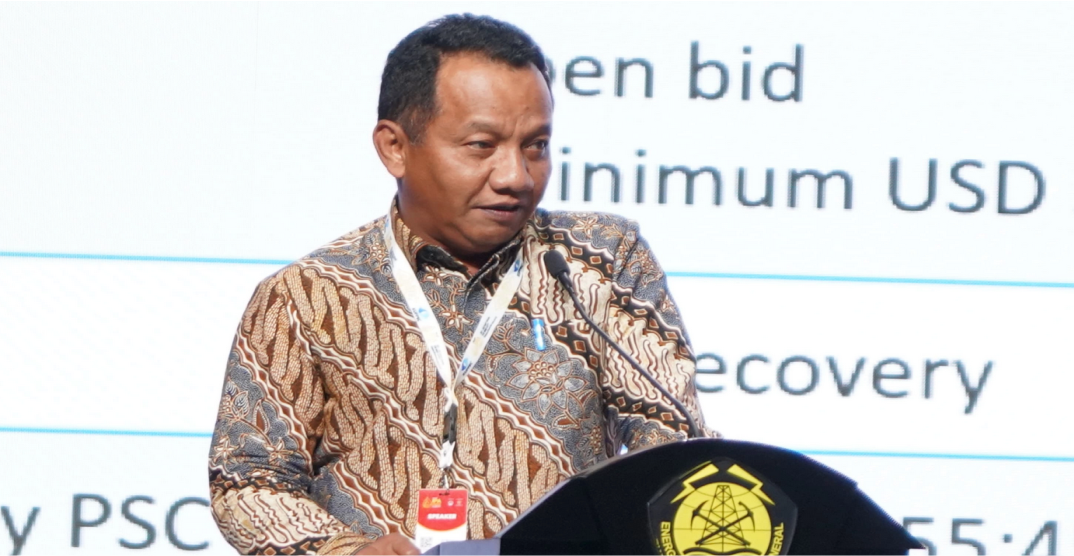
The Ministry of Energy and Mineral Resources (MEMR) said around 300 mining companies—mostly coal producers—have yet to submit their 2026 Work Plan and Budget (RKAB), as the government implements changes to the approval mechanism and moves to curb coal output.
“There are still around 300 coal companies that have not submitted their RKAB, and so on—these are the ones that have yet to submit,” Director General of Minerals and Coal Tri Winarno said on Saturday (Jan. 24, 2026).
Tri did not elaborate on the specific reasons behind the delays, but noted that some companies have faced difficulties obtaining RKAB approval due to unresolved Forest Area Borrow-to-Use Permits (IPPKH).
“There was a company whose RKAB for 2026 could not be approved. They communicated intensively with me, but the issue was that their IPPKH had not yet been issued, so we could not grant the RKAB,” Tri said.
The delays come as the government has reverted RKAB approvals from a three-year validity period back to an annual basis, requiring companies that previously held multi-year RKAB approvals for 2024–2026 or 2025–2027 to resubmit and adjust their plans for 2026 and 2027.
Tri stressed that the digital RKAB submission process through the MinerbaOne application is designed to simplify administration, dismissing claims that the system itself has slowed approvals.
Read also : RKAB disruptions, hauling ban pressure domestic coal supply in early 2026
“There have been claims that RKAB approvals are delayed because Minerba uses an application. But through intensive communication, the IPPKH was eventually issued,” he said. “The key point we want to emphasize is the importance of good communication.”
To provide operational continuity during the transition, MEMR issued Circular Letter No. 2.E/HK.03/DJB/2025, signed on December 31, 2025. Under the circular, holders of Mining Business Licenses (IUP), Special Mining Business Licenses (IUPK), Contracts of Work (KK), and Coal Mining Concession Work Agreements (PKP2B) are allowed to continue mining activities at up to 25% of their approved 2026 production plan until March 31, 2026, even if their adjusted RKAB has not yet been approved.
The circular also stipulates that previously approved 2026 RKABs—endorsed by the minister or governor before the enactment of the new regulation—remain valid as the basis for exploration and production activities only until March 31, 2026.
The MEMR has indicated plans to cut Indonesia’s coal production target in the 2026 RKAB to around 600 million tonnes, significantly below the 735 million tonnes targeted for 2025. The reduction is intended to support coal prices amid global market pressure.
Indonesian Mining Association (API-IMA) chairman Rachmat Makkasau has urged the government to accelerate the RKAB approval process, describing the policy shift as a regulatory transition for the mining industry.
“We view the RKAB review process as part of the regulatory mechanism and hope approvals can proceed swiftly, in accordance with established procedures, without significant obstacles so that operational continuity can be maintained,” Rachmat said.
Editing by Reiner Simanjuntak