

IPP coal plants flag supply risks as MEMR pledges to safeguard PLTU stocks
Wednesday, February 25 2026 - 09:25 AM WIB
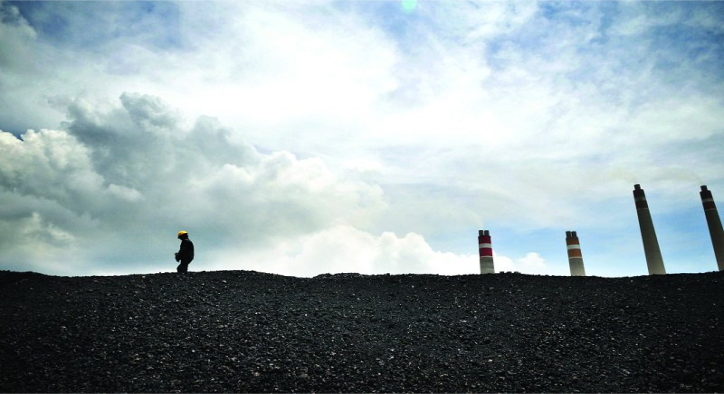
Private power producers have raised concerns over tightening coal supply for domestic power generation following the government’s plan to cut 2026 coal production, while the Ministry of Energy and Mineral Resources (MEMR) has pledged to ensure adequate fuel availability for coal-fired power plants (PLTUs).
Under the 2026 Work Plan and Budget (RKAB), the government is preparing to reduce the coal production quota to around 600 million tons, down from last year’s quota of 1.2 billion tons. Actual output in 2025 reached about 790 million tons.
The planned reduction has sparked debate among industry players, particularly independent power producers (IPPs), who warn of potential supply disruptions.
The Indonesia Private Power Producers Association (APLSI) acknowledged that the lower RKAB quota would affect coal supply dynamics for domestic power plants. APLSI Chairman Eka Satria said the policy shift has influenced procurement processes for IPPs, including limiting participation from some coal suppliers.
Nevertheless, he described the situation as part of a broader policy adjustment process aimed at balancing production levels with electricity sector needs.
“Anticipatory measures remain necessary, particularly for IPP coal-fired power plants in the Java and Sumatra systems as the national electricity load centers. Grid reliability depends heavily on the continuity of primary energy supply,” Eka told Kontan on Tuesday (February 24).
Read also: Around 300 coal miners yet to submit 2026 work plans: MEMR
He stressed the importance of regulatory certainty and synchronization between coal production policies and power sector requirements. Clear rules, he added, would give suppliers confidence to commit to deliveries while enabling IPPs to maintain reliable electricity supply.
Stockpiles at critical levels
Concerns over supply security have intensified as coal inventories at PLTUs dwindle. Business players report that the average coal days of operation (HOP) for power plants currently stand at only around 10 days, far below the ideal minimum of 25 days.
Joseph Pangalila, a member of APLSI’s Supervisory Board, warned that the coal shortage threatens national electricity reliability. He noted that IPPs contribute nearly 50% of Indonesia’s total power generation, making stable coal supply critical to the system.
According to Joseph, the supply crunch has persisted since late 2025 but has worsened because the 2026 RKAB has yet to receive government approval, while production cuts are being planned.
“Right now, it is actually very critical because most power plants have coal stocks of less than 10 days. Only a very few have more than 10 days. In fact, in the Java-Bali system, only two power plants have 25 days’ worth of coal,” he said, as quoted by Bisnis.com.
Joseph added that power plants are currently relying on coal allocations under last year’s RKAB. If the new RKAB is only finalized at the end of the first quarter, some suppliers may stop deliveries after exceeding their quotas.
Government assurance
Responding to the concerns, MEMR has pledged to safeguard coal supply for domestic power generation, particularly under the Domestic Market Obligation (DMO) scheme.
Surya Herjuna, Director of Coal Business Development at the Directorate General of Mineral and Coal (Minerba), said the ministry would ensure coal availability for domestic needs and evaluate the RKAB policy with national interests in mind.
“And that evaluation will certainly be carried out in the national interest, particularly concerning state revenue, DMO, and our domestic needs, including electricity supply. We must guarantee that. We cannot allow HOP levels to fall below 25 days,” Surya said in Jakarta on Tuesday (February 24, 2026).
The government’s reassessment of coal production and allocation policies will be closely watched by IPPs and coal suppliers alike, as both sides seek greater certainty to maintain electricity reliability while adjusting to lower production targets.
Editing by Reiner Simanjuntak