

Herald releases N. Sumatra project Pre-Feasibility Study results
Thursday, July 10 2003 - 01:43 AM WIB
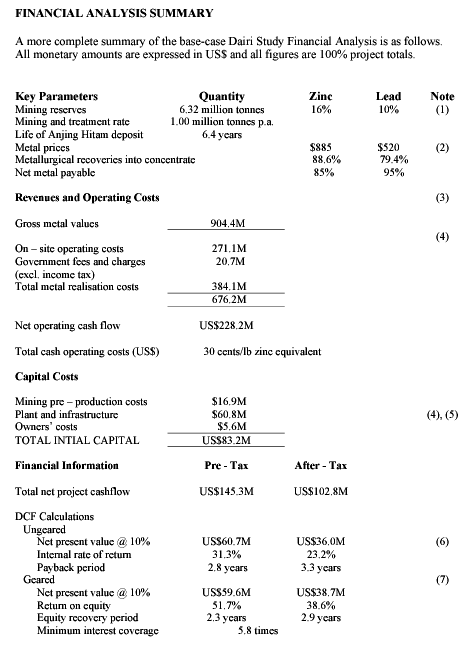
Herald is pleased to announce the results of the Dairi Zinc/Lead Project Pre-Feasibility Study.
The base case in the Study provides a positive cash flow outcome based on 1 million tons per annum operation for 6.4 years on mineable ore reserves at the Anjing Hitam deposit.
Additional resources at the project outside of the Anjing Hitam deposit total 9 million tons, but have not been considered in the Study.
Net operating pre-tax cashflows are US$228M before capital costs, which have been estimated at US$83M. Assumed metal prices have been conservative, being much lower than long-term estimates from a number of forecasters, and estimates for the cost of the processing facilities include a 20% contingency.
The Dairi project shows a robust pre-tax IRR (internal rate of return) of 31%. With 70% gearing, pre-tax return on equity is 52%.
Total cash operating costs have been estimated at US$0.30 per pound zinc equivalent.
* 20% joint venture partner PT Aneka Tambang (Antam) may elect to acquire an additional 10% in the project form Herald for US$0.6M.

Notes:
1. Mineable reserves are those tonnes believed to be extractable from the Anjing Hitam deposit only. No extension of mine life has been assumed from the conversation of other existing resources to reserves, or from further exploration success.
2. Metals prices are flat for the life of the project and have been calculated from a weighted average of:
- 50% hedged prices using the forward curve of the London Metals Exchange
- 50% spot prices, using the bottom end of consensus forecasts of a number of investment banks and reputable metals price forecasters.
3. Operating costs are flat and have not been escalated.
4. Operating costs include an estimate for sustaining capital expenditure.
5. Plant capital costs include all offsite roads and port facilities, and include a contingency factor of 20%.
6. A discount rate of 10% has been used, which approximates Herald?s weighted average cost of capital.
7. A gearing ratio of 70% debt, 30% equity has been used in the geared case.
Debt is assumed to be repaid in equal instalments over 3.5 years, and all borrowing costs (including political risk insurance) have been accounted for. (*)
